The war Americans never wanted
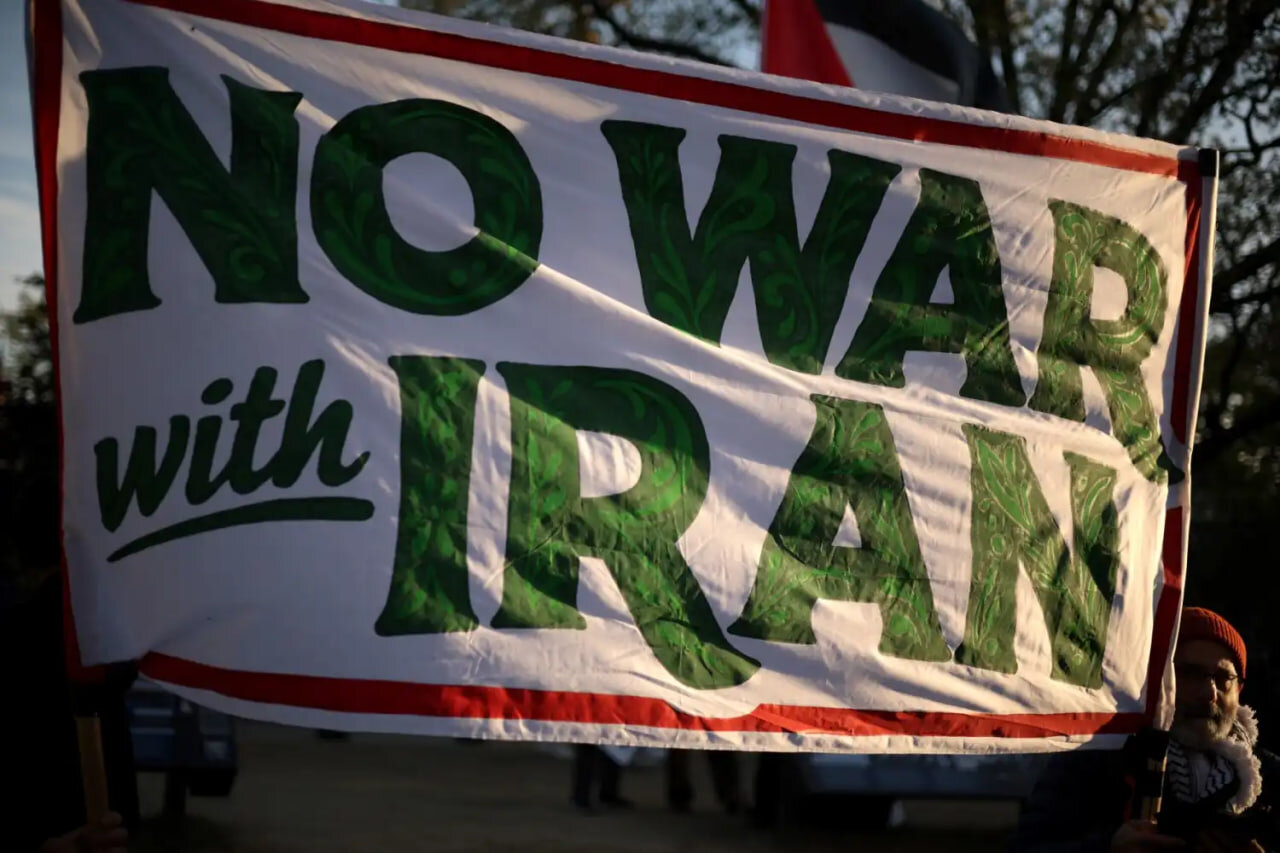
TEHRAN – There is no poll that shows a majority of Americans supporting the illegal U.S. war on Iran. There never was one.
From the moment the first strikes were launched on February 28, the American public was already against it. More than eight months later, in November, the opposition has only hardened.
An analysis of 153 public opinion surveys across seven major U.S. conflicts confirms what the streets have been saying since day one. The illegal U.S. war on Iran is the most unpopular conflict in modern American history, and it is not particularly close.
Three ways it is unprecedented
The analysis of the 153 polls comes from Stephen Semler, a policy analyst and data journalist who writes the Polygraph newsletter and co-founded the Security Policy Reform Institute. His review, adapted by Responsible Statecraft, measures net support. That is the share of Americans backing a war minus the share opposing it.
At the outset of the conflict, 13 percent more Americans opposed it than supported it. In other words, the war began with more people against it than for it.
On that measure, the illegal U.S. war on Iran is historically alone in three distinct ways.
First, it is the only major U.S. war to begin with negative net support. That was a first in the modern polling era. World War II, Korea, Vietnam, the Persian Gulf War, Afghanistan, and Iraq all began with the public on their side. Iran did not.
Second, it is the least popular war on record. By June, net support had sunk to minus 32 percent. That fell below the minus 31 percent recorded in the final poll of the Vietnam War, a conflict that divided the U.S. for a decade.
Third, it is the first U.S. war to remain unpopular for its entire duration so far. As Semler writes, at no point have more Americans supported the illegal U.S. war on Iran than opposed it. There was no rally-around-the-flag moment. There was no brief window of national unity. The opposition was the baseline from the very beginning.
The speed is what separates Iran from every war that came before it. It took Americans nearly four years after the 2003 Iraq war to conclude it was a major mistake. It took more than six years for Vietnam to reach that same verdict. For Iran, it took less than two months. By late April, 61 percent of Americans already called the U.S. attacks a mistake.
The political reckoning is already here
The unprovoked war that killed 168 schoolchildren and staff on the first day and its unpopularity have already reshaped American politics in real time.
The day after Republicans lost control of both chambers of Congress in the November midterms, Vice President JD Vance wrote that the reason Republicans lost is Iran. He challenged anyone who disagreed to say so plainly. If you would like to argue it was worth it, he wrote, that losing the Senate for the next six years was worth it, then do so.
Trump himself was more equivocal. Asked after the midterms whether it contributed to Republican losses, he conceded that Iran was a piece of it. But he insisted he would do it again. The contrast between the two men captures the difficulty the administration faces. The war is toxic enough that the vice president blames it for a historic defeat.
Even Trump’s most loyal supporters have been peeling away over the course of the war. In May, half of Republican voters believed it was worth its economic costs, according to polling cited by Politico. By July, that number had collapsed to 37 percent. By the fall, nearly one in five Republicans said the U.S. should end its involvement regardless of the economic consequences. The base that once cheered the strikes is now split and looking for an exit.
A nation that said no from the start
In late March, millions of Americans participated in more than 3,200 marches across all 50 states and several European countries. They were protesting the illegal war and the economic pain it has inflicted. They carried signs with messages like “No Kings” and “Trump Has to Go”.
They were angry about the war as well as what it was doing to their daily lives. Gas prices climbed toward four dollars a gallon. The cost of fuel and food became inseparable from the cost of the conflict.
The opposition was not confined to civilians. In April, roughly 60 military veterans were arrested protesting inside the Cannon House Office Building. That is a congressional office building steps from the U.S. Capitol. Some of the veterans were visibly disabled. They unfurled banners reading End the War on Iran. They also held a flag-folding ceremony for service members killed in the conflict.
Mike Prysner, the executive director of the Center on Conscience and War, was among those arrested. The center supports service members who refuse to fight on moral or religious grounds. Speaking before his arrest, Prysner said the illegal war is already deeply unpopular. He added that more than 100 service members had already begun filing as conscientious objectors. These are troops refusing to serve in what they consider an immoral war.
The economic pain was not abstract. By late May, the national average for a gallon of gas had reached $4.55, according to AAA data. That was a roughly 50 percent rise since the war began.
Lower-income households cut gas consumption by about 7 percent. Even so, they still spent 12 percent more on fuel, according to research from the Federal Reserve Bank of New York.
That explains why the backlash was so durable. When Politico asked Trump voters in July what they thought, 57 percent of Republicans and 63 percent of non-Republican Trump voters said the conflict was to blame for rising fuel costs.
The verdict is in
Every war eventually becomes unpopular. The U.S. war on Iran arrived there before it even began.
It is the only one in which opposition has fallen deeper than it did at the end of the Vietnam War. The polls have been consistent from the first day. The protests have been nationwide. Veterans have refused to fight. And the political consequences are already being counted in lost seats and fractured coalitions.
This is an illegal and unprovoked war that lost public support before it was even launched. It is not a war that has lost public support over time. It is a war that never had it.
Leave a Comment